
Gillian Lasher, AmeriCorps California
From Cubicles to Climate Action: A Young Professional’s Path in Public Service
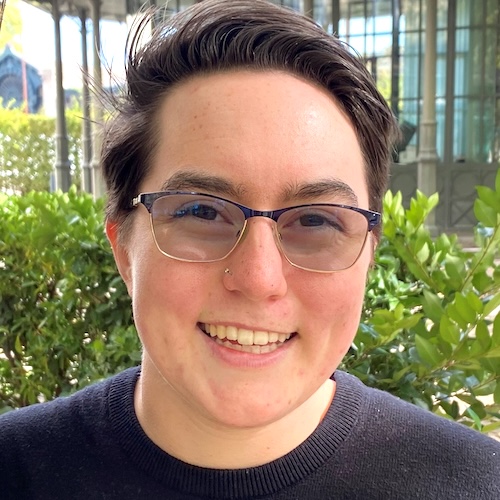
Gillian Lasher is an AmeriCorps California member who served two terms with CivicSpark in the City of Sacramento Office of Climate Action and Sustainability.
What inspired you to join AmeriCorps?
Growing up, I was inspired by my parents’ service in the Peace Corps and knew that I wanted to do something similar. I am from Colorado originally and was looking for a new adventure after graduation. AmeriCorps was the perfect way that I could combine my passion for community-building with the opportunity to relocate. I took a leap of faith and signed a lease in California without a secured position, but I felt confident that I could find a program that was meaningful to me.
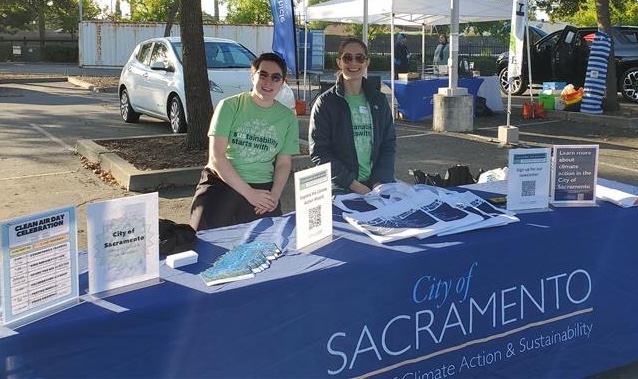
Gillian and Site Supervisor, Sarah, at California Clean Air Day 2024
I came across CivicSpark, and I am so glad I joined. The program allowed me to explore how I could make tangible change in my community, both “on the ground” and at a broader city policy or planning level in the sustainability field. CivicSpark was also a great transition from college because I could see in the real world how the concepts I had learned in the classroom functioned on a day-to-day basis at the local government level at my project site, the City of Sacramento, Office of Climate Action and Sustainability. Because of my positive service experience, I have decided to put down roots in Northern California and continue my commitment to sustainability work in the region.
What did service look like for you?
Around 90 percent or more of the job was in the office (or working from home) and the other 10 percent was at outreach events or on the occasional tour. Most of my days in the office consisted of meetings, project work, and coordinating with other City departments. For example, I co-led the implementation of the City of Sacramento’s annual Earth Day beautification events, which over my two years spanned 15 cleanup sites, pulled in hundreds of volunteers, and cleaned up over 18,000 pounds of trash and green waste citywide. Coordinating Earth Day required a lot of air traffic control and I loved the opportunity to step into a project manager role and get to know all the great folks at the City.
“ I’m fortunate my service site was very supportive and committed to my success and learning, both professionally and personally. The community and positive experience from my first term are why I decided to continue for a second one.”
My service also involved some self-directed projects. One of these was developing the City’s first Staff Sustainability Training, focused on educating all City employees about sustainability. Nothing like this had been designed before at the City, so over the course of my two years, I spent hours researching, writing, and working with topic experts to craft comprehensive and accessible modules. This included answering questions like: “How do I communicate the City’s Climate Action and Adaptation Plan to folks who don’t work in sustainability?” and “What does reducing our greenhouse gas emissions look like at a departmental level?” It was a great experience in effective sustainability communications!
Outside of the office, I attended around 25 outreach events during my Fellowship, talking to residents from all backgrounds and communities in the city about various topics like disaster preparedness, home electrification, and important sustainability goals, such as the Climate Action and Adaptation Plan and the Sacramento Urban Forest Plan. Getting out in the community and personally connecting with folks was my favorite part of the Fellowship.

Gillian celebrates a job well done at Artivio Guerrero Park during the Sacramento Earth Day cleanup events
Was there anything surprising about your experience?
Before CivicSpark, I had never worked in a formal office setting. I remember the first day of my Fellowship being so surprised that I not only had my own desk, but that people really do work in cubicles. It feels a little silly now after two years of service, but it’s fun to look back and realize how much I’ve grown. I came in with some preconceived notions about what it was like to work in an office, and I was pleasantly surprised that my office job turned out to be fun. I looked forward to our weekly in-person days, when I got to know my coworkers, learn how to run hybrid meetings, and eat the occasional homemade baked goods. Office culture really matters, and I am fortunate to have been with the City of Sacramento where I felt a sense of belonging.
I also had to learn how to work from home most of my workdays. Configuring my rather small 800-square foot, two-bedroom apartment into a working and living space for both me and my roommate was a challenge at first. I had to establish good mental and physical boundaries with myself between life and my “office” (a desk in my bedroom). Because of this, I have a healthier relationship with work, such as taking walking breaks and using a standing desk. The key is to get creative, especially as a young professional.
Did you experience any challenges during your service?
Moving to California three months after graduation was a very difficult—but ultimately rewarding—transition from college life into adulthood. At the start of my Fellowship, I was finishing up a summer internship and recovering from major knee surgery. It was a huge growth period, and I had to quickly learn how to establish myself as a young professional in the workplace, as well as supporting myself financially for the first time and navigating systems like CalFresh.
I’m fortunate my service site was very supportive and committed to my success and learning, both professionally and personally. The community and positive experience from my first term are why I decided to continue for a second one. I was given tasks that were integral to the team’s success, and I learned how to take initiative in the workplace. I built up confidence as a young professional and learned how to present myself with tact and clarity alongside folks in their mid-to-late careers.
Did your AmeriCorps California service support your career goals?
Yes! Coming into the Fellowship, I knew that I was passionate about helping people and the environment, and CivicSpark was a great way to see how these played out on the local government level. Before CivicSpark, I had considered law school and international environmental policy, and while I am still passionate about both, I was looking for an opportunity to expand my experience on a community-level. My Fellowship was also a great way to get my feet wet in the sustainability scene in California. The CivicSpark program exceeded my expectations and solidified my commitment to both the Sacramento region and local sustainability work. I am now exploring sustainability opportunities in both the local government and nonprofit contexts for my next California adventure!
What advice would give to an incoming member?
On a more personal note, I had to navigate the medical accommodations process coming in as a Fellow, which is something I had not needed to do before in previous jobs or in school. I was recovering from two major surgeries during my service terms, and getting medical accommodations was a huge lesson in self-advocacy and the importance of valuing myself enough to get the support I needed. I learned that what I was going through didn’t define me, and in fact, made me a stronger person and leader. I hope that others can hear my story, and whatever they’re going through, know they are not alone and can find support!